Linda Sok: Warped Archive
Brattleboro Museum and Art Center
10 Vernon St, Brattleboro, Vermont, 05301
July 11 – November 1, 2026
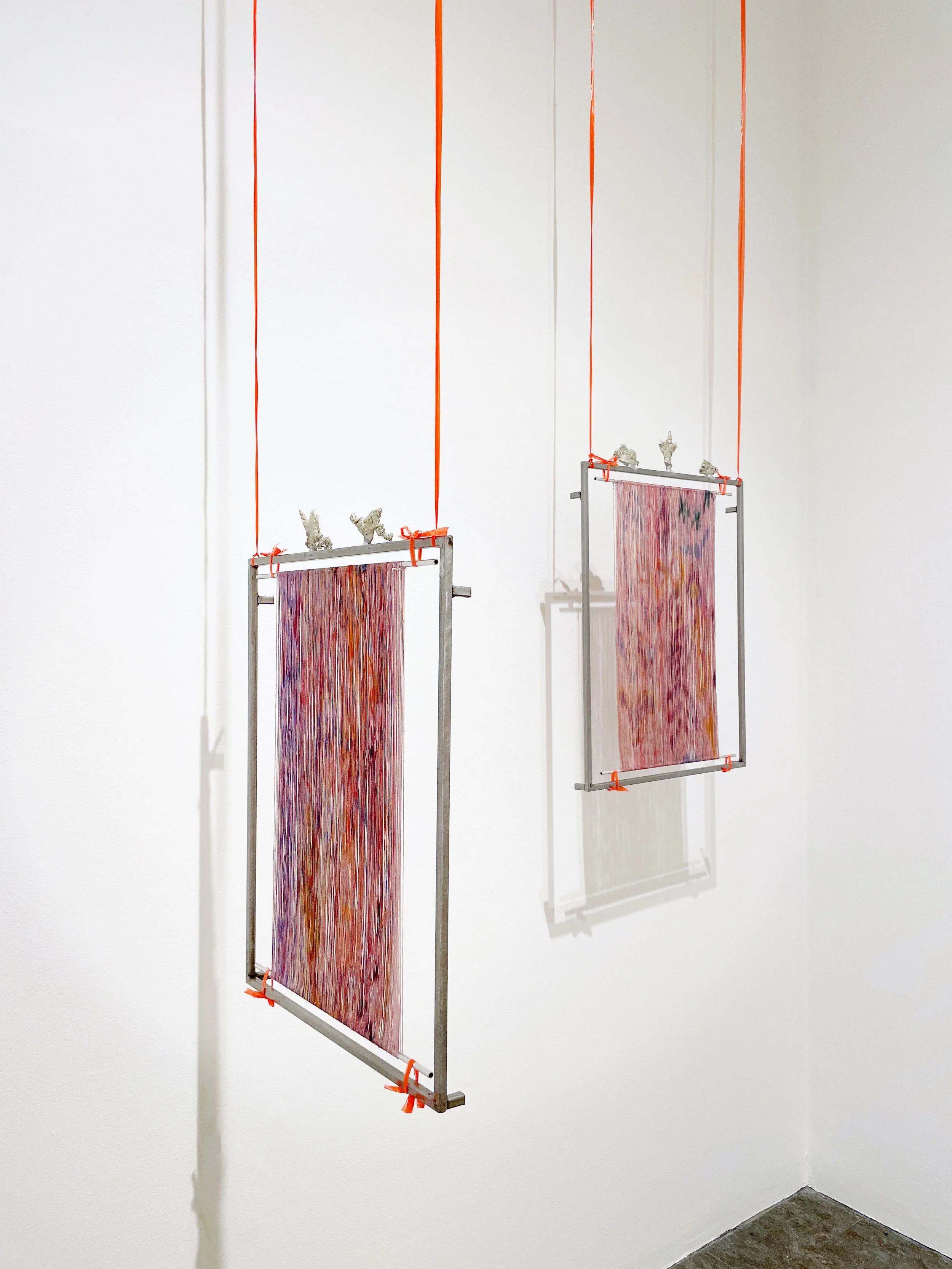
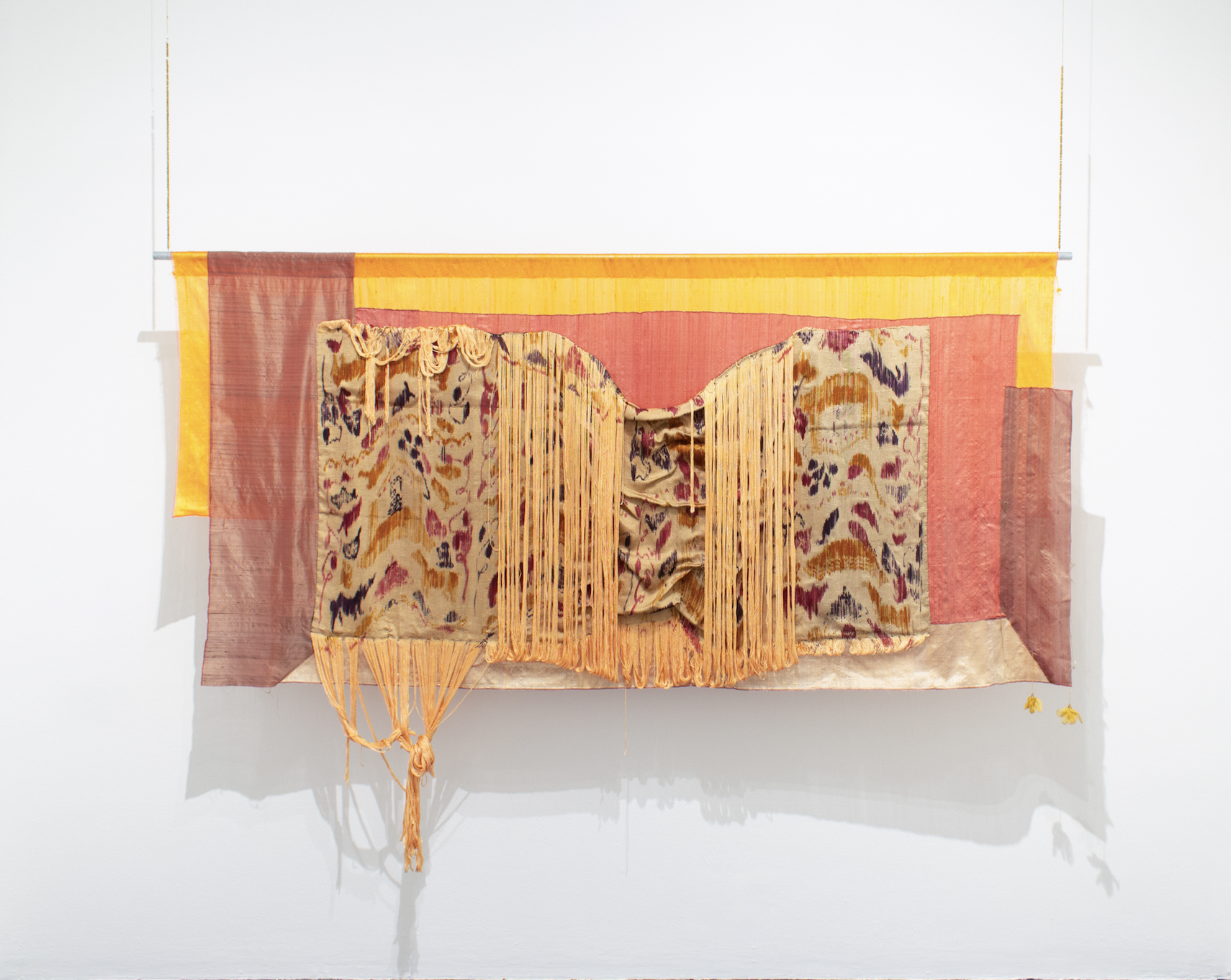
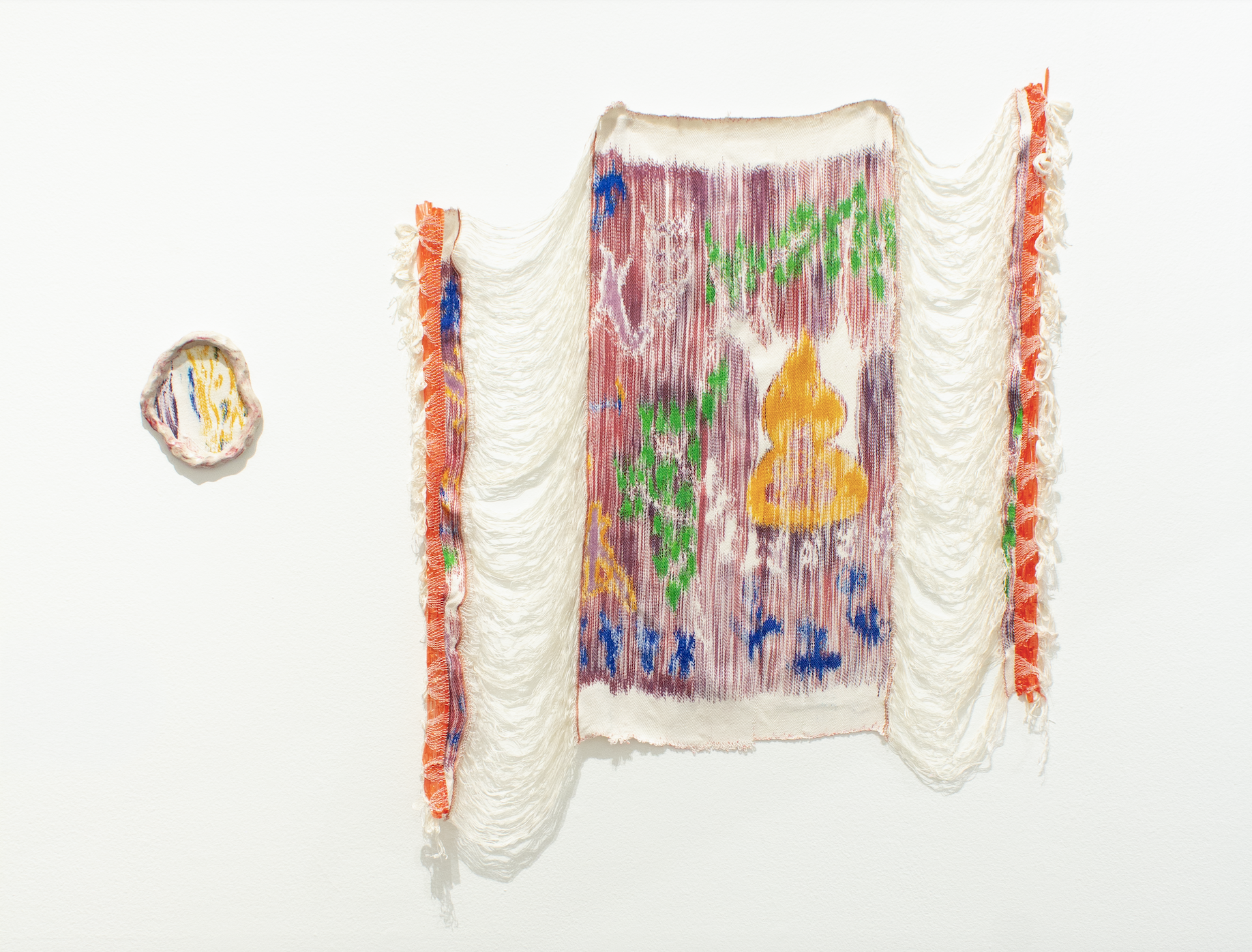
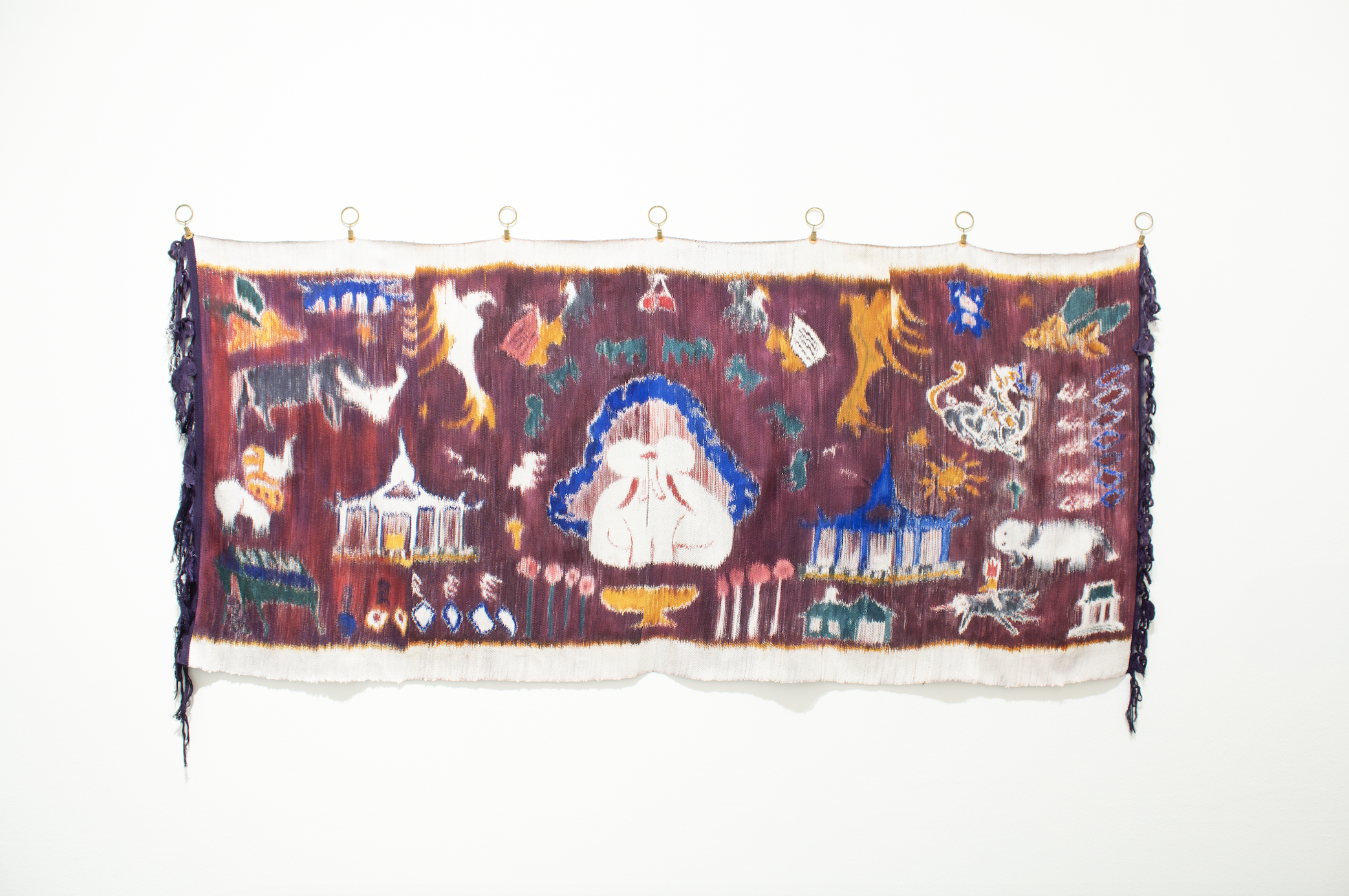
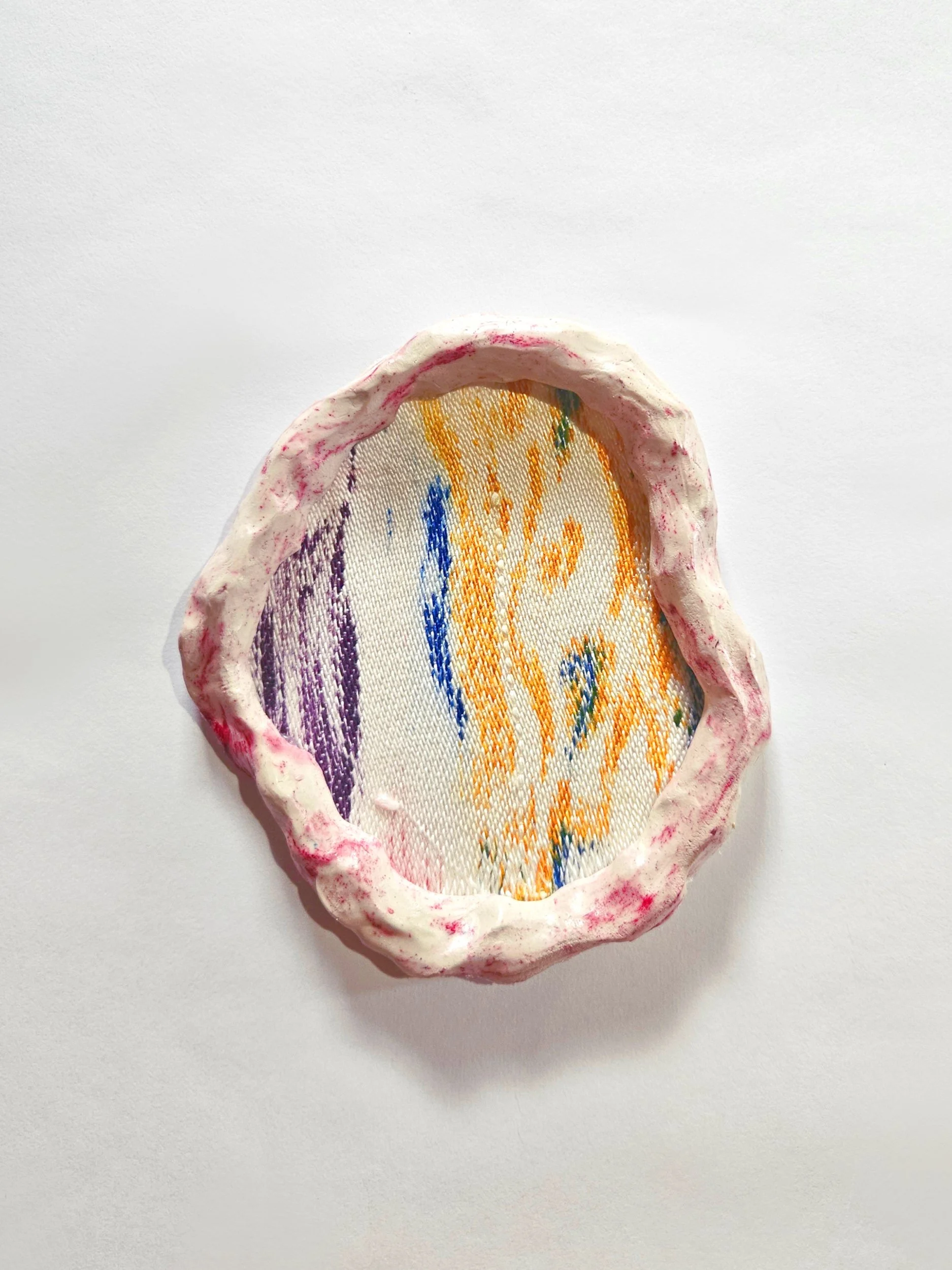
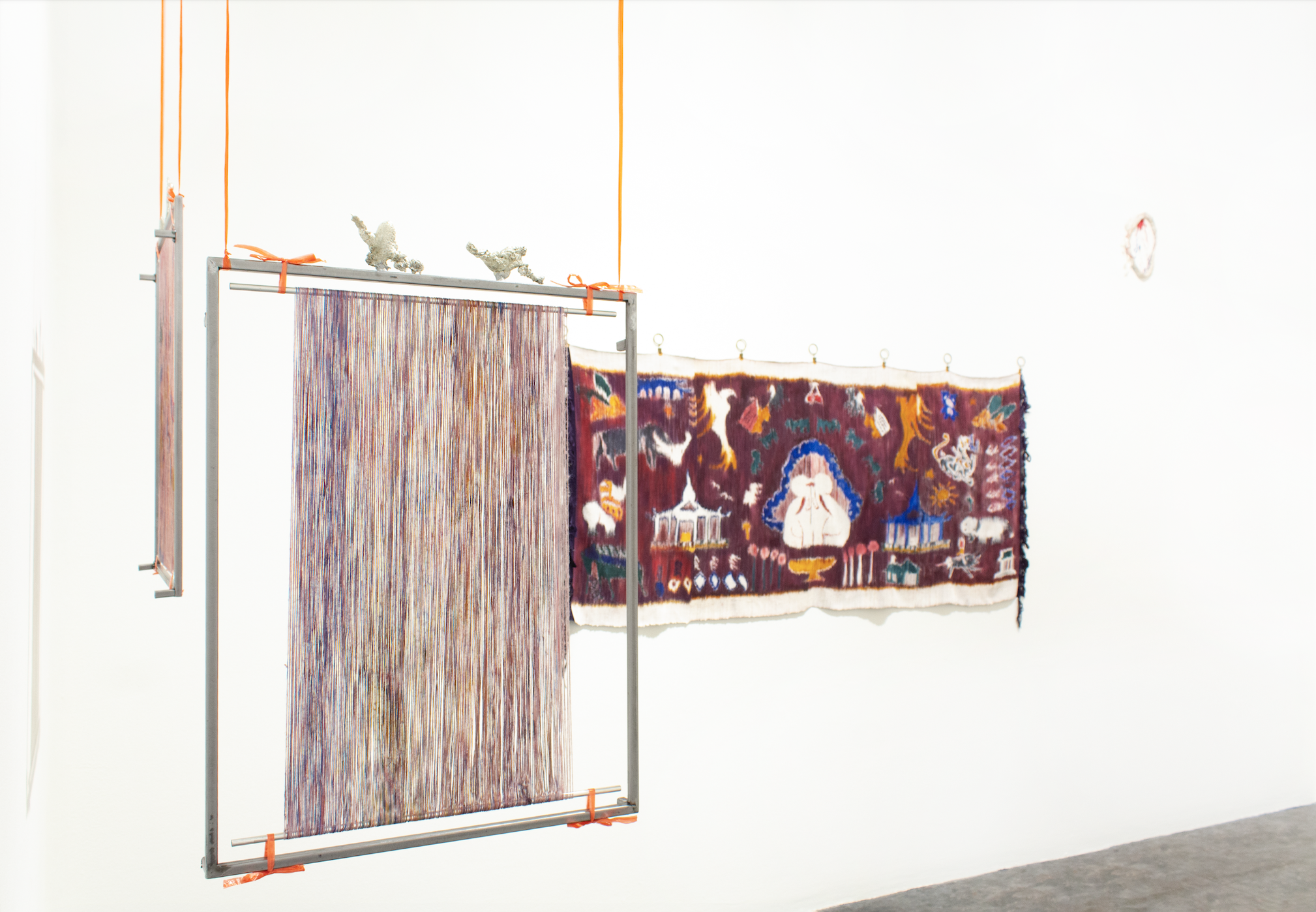
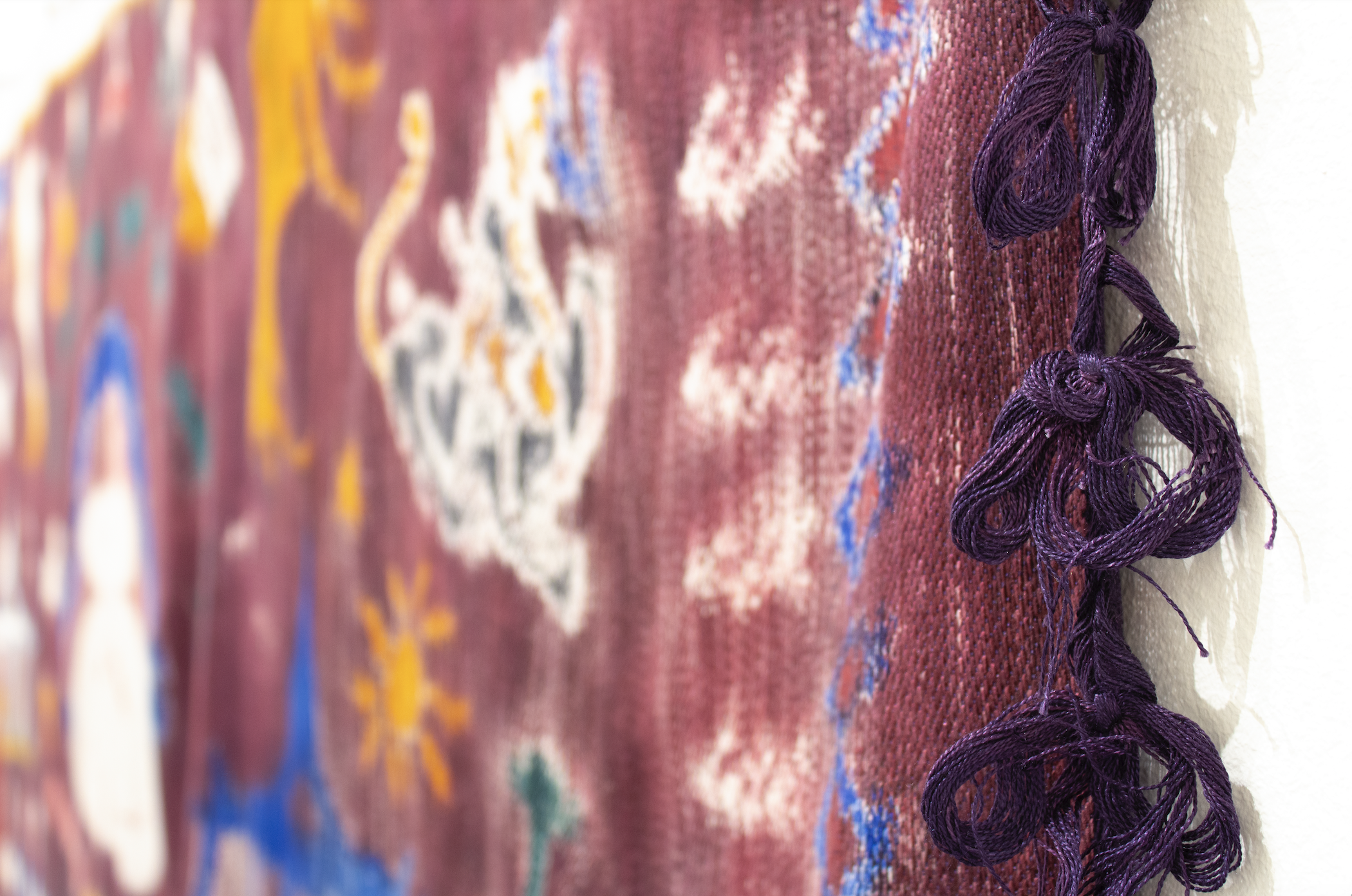
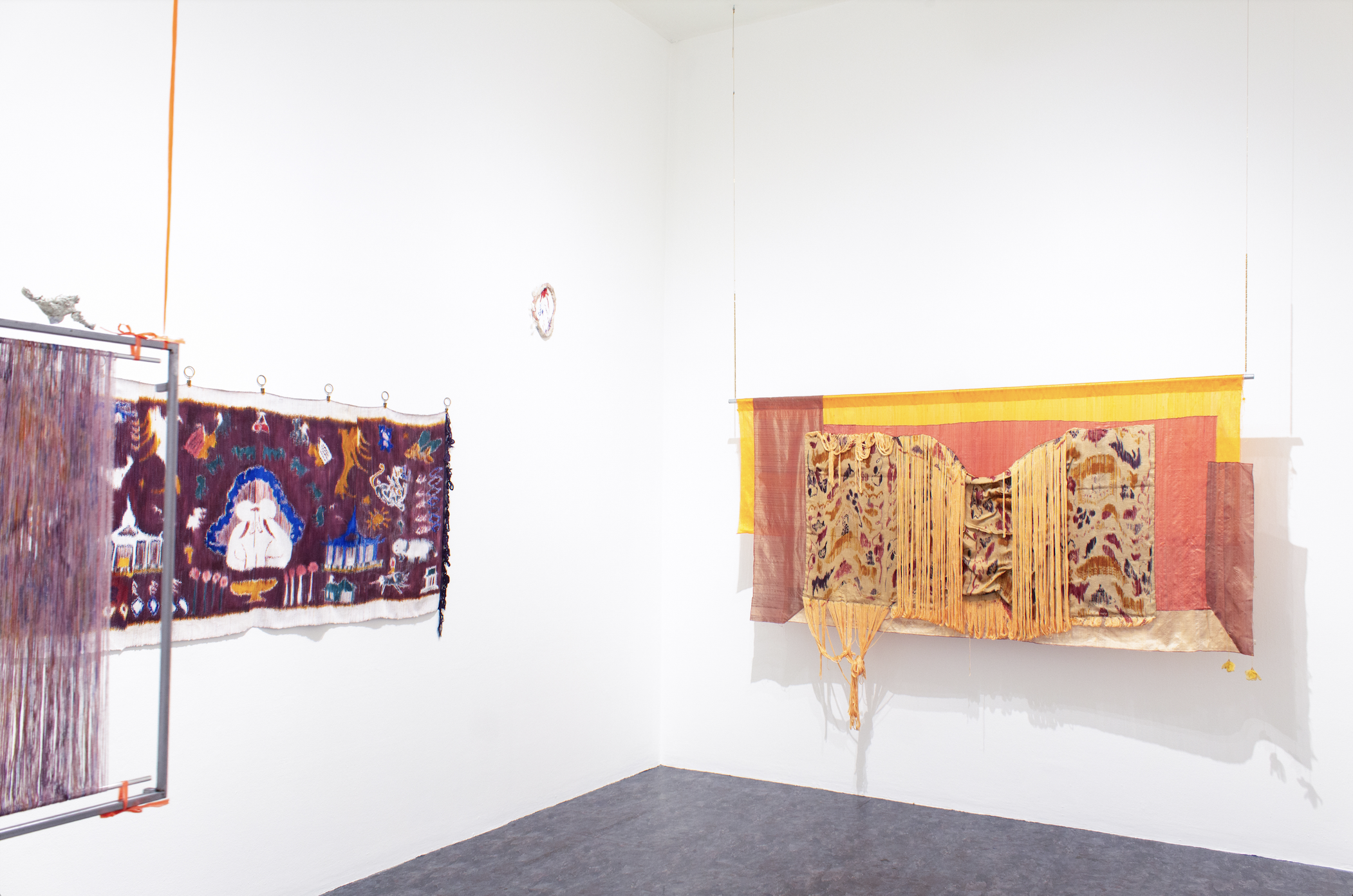
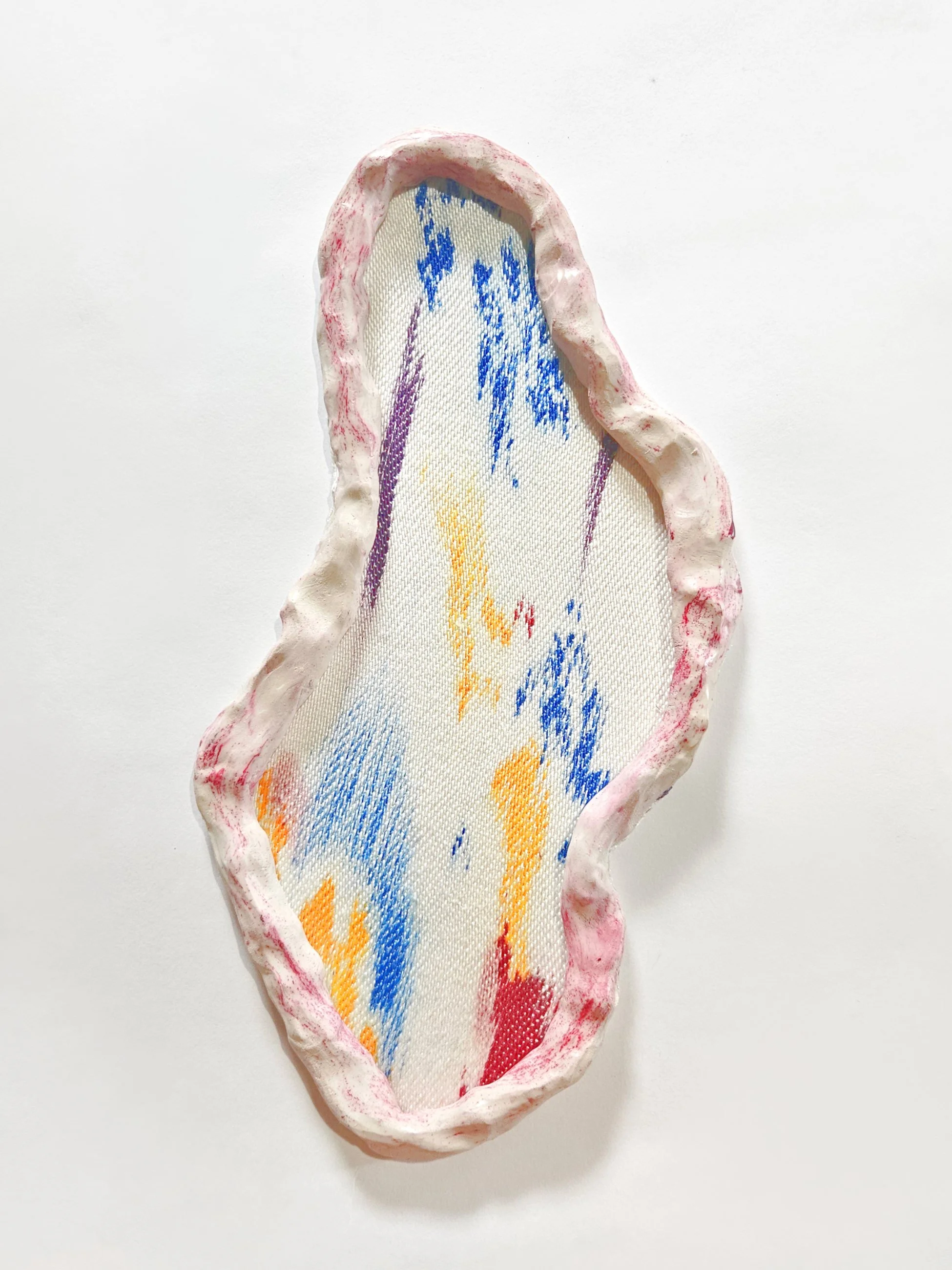
PLEASE SEE CHECKLIST BELOW FOR artwork Information. INSTALLATION PHOTOGRAPHS BY Erin Jenkins. Images Courtesy of the Artist and the Brattleboro Museum and Arts Center.
Historically, Cambodian women created large silk pictorial tapestries, known as pidans, for Buddhist temples, using jewel-tones and cosmic, spirit, and animal imagery. But the Khmer Rouge, a totalitarian regime that killed a third of Cambodia’s population in the 1970s, persecuted weavers and destroyed their work. Despite contemporary efforts to resuscitate the matrilineal craft, examples and knowledge of this resist-dyeing and ikat tradition have been largely lost.
Australian-Cambodian artist Linda Sok engages with French-colonial documentation of disappeared textiles at the National Museum of Cambodia. From these archival descriptions, Sok and her extended family imagine new designs for contemporary tapestries. Sok creates weavings that explore the tender tension between history and imagination and that pose the question: What might be gleaned or remade from a warped archive? The collaborative works are not recreations, but reincarnations of an enduring and now diasporic textile tradition.
What does it mean for a work to be “lost”? Destroyed by government forces, stolen via colonial plundering, misplaced in museum storage, used until threadbare and disintegrating—there are many ways for an object to disappear. Likewise, all inherited historical material reflects some kind of warp, whether through subjective perspectives, intentional erasure, or physical decay. Saidiya Hartman, scholar of African American literature and cultural history, presents the concept of “critical fabulation,” a method of combining historical information with creative storytelling to address gaps in the archive. Sok and her family are arguably engaging in this process, but unlike Hartman, who counters the silences of history via writing, Sok creates tangible objects as they might have been, never were, and are today. Working with a warped—and inevitably incomplete—archive, Sok rewrites and expands the narrative of pidan textiles.
Checklist